
Blenders
Blowtorches
Breadmakers
Coffee Grinders
Coffee Makers
Deep fryers & Airfryers
Food Cookers
Food Dehydrators
Food Mixers & Food Processors
Hand Blenders
Hand Mixers
Ice Cream Makers
Ice Makers
Juicers
Kettles
Kitchen Scales
Meat Slicers
Mincers
Mini Choppers & Spiralisers
Other Kitchen Appliances
Pasta Makers
Popcorn Makers
Sandwich Toasters
Soft Drink Makers
Toasters
Vacuum Sealers
Waffle Makers

Vibration Motors
Looking for the right vibration motor? PriceRunner guides you in finding the best one to suit your needs. We list a wide range of vibration motors from various brands and retailers, making it simple to compare features and prices. Use our category filters to refine your search based on specifications like size, power, or application. Whether you need a motor for industrial use or a DIY project, our filters help you find exactly what you need. Compare different models side-by-side to see which vibration motor fits your requirements and budget. With user reviews and up-to-date data, you can make the right decision confidently. Ready to find the ideal vibration motor for your project? Begin here and explore the selection that matches your preferences.
Try flexible payments withLearn how
200+ products





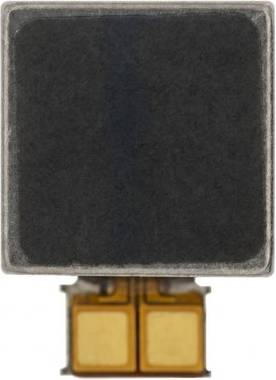


Vibration Motors: 3 things to consider before buying
When choosing vibration motors, it's crucial to consider the size and compatibility with your device. Vibration motors come in various sizes, typically measured in millimeters. Ensure that the motor you select fits comfortably within your device's housing without causing any obstruction. Additionally, check the compatibility with your device's voltage and current requirements to avoid any electrical issues. For example, a motor designed for a smartwatch may not be suitable for a larger device like a smartphone. By ensuring proper size and compatibility, you can achieve optimal performance and longevity.
The power and performance of vibration motors are critical factors influencing user satisfaction. Look for specifications such as the motor's rated speed (RPM) and force (measured in G or N). A higher RPM generally results in stronger vibrations, which might be necessary for devices requiring noticeable feedback, such as gaming controllers or fitness trackers. However, balance is key—too much power can lead to excessive noise or battery drain. We recommend considering your specific needs and testing different options to find the right balance between power and efficiency.
Noise levels can significantly impact user experience when using devices equipped with vibration motors. It's important to choose motors that provide effective vibration without producing disruptive noise. Quiet operation is especially vital for discreet devices like wearables or smartphones used in professional settings. Check product reviews or manufacturer specifications for noise level ratings, often expressed in decibels (dB). Opting for a quieter motor ensures that vibrations remain subtle yet effective, enhancing overall user satisfaction without drawing unwanted attention.
FAQ
Vibration motors are small electric devices that convert electrical energy into mechanical vibrations. They are commonly used in mobile phones and wearable devices to provide tactile feedback. When choosing a vibration motor, consider the size, vibration strength, and compatibility with your device.
Vibration motors work by using an unbalanced weight attached to the motor shaft. As the motor rotates, the imbalance creates vibrations. These motors vary in speed and intensity, so it's important to select one that matches your device's requirements for optimal performance.
Vibration motors are available in two main types: coin (or pancake) motors and eccentric rotating mass (ERM) motors. Coin motors are compact and ideal for slim devices, while ERM motors offer stronger vibrations. Consider your device's design and required vibration strength when selecting a type.
A vibration motor is important because it provides haptic feedback, enhancing user interaction by confirming actions like touches or alerts without sound. This feature is crucial for discreet notifications and improving user experience in noisy environments.
Choosing the right vibration motor involves considering factors like size, voltage, vibration strength, and compatibility with your device. Check product specifications and compare options to ensure the motor meets your specific needs for effective performance.
Borrowing more than you can afford or paying late may negatively impact your financial status and ability to obtain credit. Credit subject to status. Ts&Cs and late fees apply.
Advertisement
Enhance your projects with the right vibration motor
Vibration motors are essential components in many devices, providing the necessary movement and feedback. They are used in a variety of applications, from mobile phones to industrial machinery. Understanding the different types and features can help you make the right choice for your project.
Types of vibration motors
There are several types of vibration motors available, each suited to different needs.
Eccentric rotating mass (ERM) motors
ERM motors are common in devices like mobile phones. They use an off-centre weight attached to the motor shaft, creating vibration as it spins. These motors are compact and efficient, making them ideal for small gadgets.
Linear resonant actuators (LRA)
LRA motors offer more precise control than ERM motors. They use a moving mass attached to a spring, driven by an electromagnetic field. This design allows for accurate vibration patterns, useful in haptic feedback applications.
Brushless DC motors
Brushless DC motors are known for their durability and efficiency. They have no brushes, reducing wear and tear. These motors are perfect for industrial applications requiring long-lasting performance.
Key features to consider
When choosing a vibration motor, several features are important.
Size and weight
The size and weight of the motor affect its suitability for different applications. Smaller motors are ideal for portable devices, while larger ones are better for industrial machinery.
Voltage and current
Different motors require varying levels of voltage and current. Ensure the motor matches your power supply to avoid issues.
Vibration amplitude and frequency
The amplitude and frequency of the vibration determine its intensity and speed. Consider the desired effect when choosing these specifications.
Mounting options
Mounting options vary depending on the motor type. Some motors are designed for easy integration into existing systems, while others require custom mounting solutions.
Common uses for vibration motors
Vibration motors have a wide range of applications.
Mobile devices
In mobile phones, vibration motors provide tactile feedback for notifications and alerts. They enhance the user experience by offering a physical response to touch inputs.
Wearable technology
Wearable devices use vibration motors for discreet alerts and notifications. They offer a subtle way to communicate information without sound.
Industrial applications
In industrial settings, vibration motors are used in machinery for tasks like material handling and sorting. They help automate processes and improve efficiency.
Popular brands
Several brands are known for producing high-quality vibration motors:
- Precision Microdrives: Offers a wide range of motors for various applications.
- Nidec: Known for their durable and efficient brushless DC motors.
- Jinlong Machinery: Provides compact motors suitable for mobile and wearable devices.
Choosing the right vibration motor depends on your specific needs and requirements. Use PriceRunner to compare prices and find the best option for your project.
Shop smarter with PriceRunner
Find the best option with the help of our handy tools. Compare prices, apply smart filters, read user reviews, and explore price history—all in one place.
Filter and sort
Searching for something particular? Filter by everything from price and brand to material or colour to see only the products relevant to you. Since delivery options and shipping costs can vary between shops, you can easily find your perfect match by filtering based on these criteria as well.
Reviews: See what other users think
Reviews from other users can provide valuable insights into the product's features and durability. Product ratings help you quickly assess popularity and customer satisfaction.
Price history: Find real deals
To ensure that you've found a good deal, you can view the product's price history. Select a time period and whether you wish to include international prices. Price history for the past three months is shown by default, but you can also look into a longer time period. If you want to determine if a deal from a specific shop is as good as it seems you can click on "Choose store" above the price graph to show an individual shop's pricing history.
Borrowing more than you can afford or paying late may negatively impact your financial status and ability to obtain credit. Credit subject to status. Ts&Cs and late fees apply.